I don’t write about specific political campaign ads very often, but this one happens to be directly related to the healthcare field (namely, medical debt), so it seemed to merit a few words.
About a week ago, Adam Hamilton, the Democratic nominee for U.S. Senate in Kansas, came out with a new TV ad featuring one of the former patients who was once sued by his Republican opponent, incumbent Senator (and former OB/GYN) Roger Marshall (the ad starts at 2:26 in the clip posted above).
In the ad, the woman, Meischa Zimmerman, says:
“One evening I see lights. I open the door, and it’s a police officer. They arrested me because I didn’t make a $50 payment to Roger Marshall. I was 8 months pregnant and I said please, do not handcuff me in front of my 2-yr old daughter.
“Roger Marshall preyed on the low-income families of Kansas. The healthcare system is broken…but not for Roger Marshall. He’s absolutely profiting from it.”
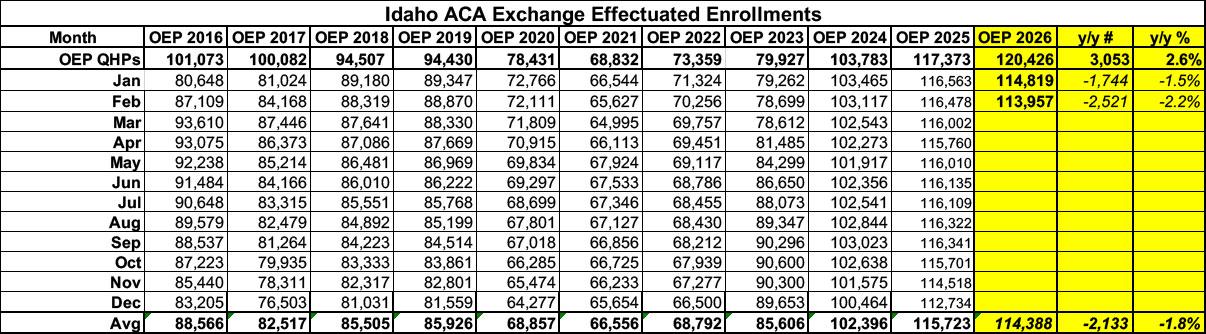
Idaho is one of a handful of states where plan selections during the 2026 Open Enrollment Period actually increased year over year, by around 2.6%, in spite of the enhanced federal subsidies expiring back in December.
Two months into the year, however, effectuated enrollment is actually down slightly (by around 2.2%, or roughly 2,500 enrollees).
Here's what this looks like visually, with both 2025 and 2019 (the last pre-COVID year, which didn't include the enhanced subsidies) included for comparison:
Individual Market Proposed Average Rate Changes for Plan Year 2027
The summary table below provides an overview of the proposed average rate changes from 2026 in the individual health insurance market, as reported by the insurers.
It is important to note these are the initial rates proposed by the insurers and filed with the Departments. Rates are subject to review and approval by the Departments, and the final approved rates may vary from these proposed rates for many reasons.
Additionally, the actual rate change a consumer will experience in 2027 can vary from the average – with factors such as specific plan, geographic rating area, and age playing a major role.